
How to Get Your Poems Published in 2026: Trish Hopkinson's Guide for Poets
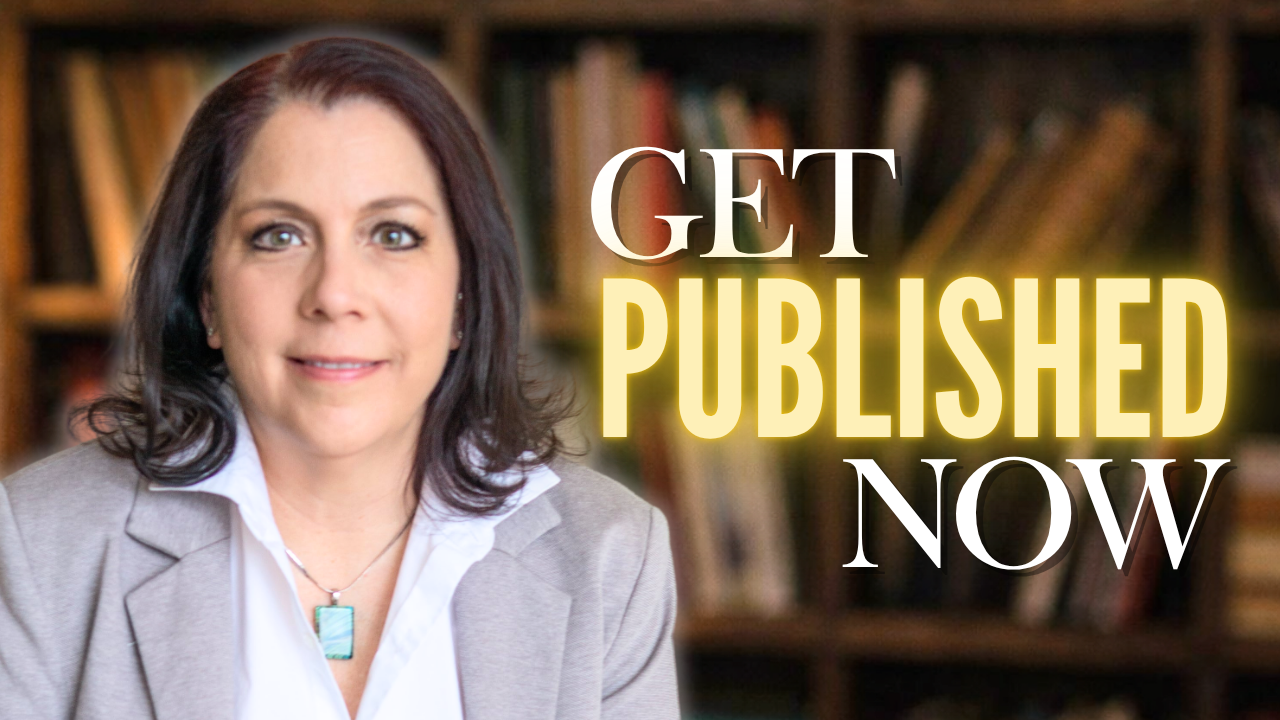
Tap image to join us on The Poetry Vessel YouTube Channel for a 70-minute guide on getting your poems published.
If you've ever wondered how to get your poems published, you're not alone — and you're in good company. In this episode of The Poetry Vessel, I sit down with Trish Hopkinson, poet, author of five chapbooks and the full-length collection A Godless Ascends (Lithic Press), and founder of one of the most trusted online submission resource hubs for poets.
We talked about everything from handling rejection (including one poem that was rejected 77 times before it found a home) to choosing the right literary magazine, building a supportive poetry community, and writing through grief and trauma.
Below is a summary of her best advice — or you can watch our complete video interview by tapping “watch now” below.
When Is a Poem Ready to Submit?
Before you even think about submission guidelines for literary magazines, Trish says the real first step is figuring out why you want to publish at all. Some poets want recognition. Others want to build a literary CV, get paid, or simply feel proud to call themselves a published poet.
None of these goals is more valid than another — but knowing yours will shape your whole submission strategy.
Her advice for gauging readiness isn't just about a rigid checklist, but also community connection. Reading at open mics, joining low-cost or free writing workshops, and sharing work with peer groups gives you real-time feedback on whether a poem is landing the way you intended, or whether something still needs work.
(Looking to hone your craft before submitting? Check out our Poetry Workshops or explore our Writing Services for 1-on-1 editorial feedback from my 20 years experience as a writer and Malibu Poet Laureate ‘23-’25.)
Poetry Rejection Is Normal — Here's How to Reframe It
Every poet gets rejected. Trish recommends that we treat rejections as data; something impersonal.
She shared that she recently had a poem accepted after sending it out 77 times. She didn't rewrite it or lose faith in it — she kept submitting because she believed in the work, and eventually it found an editor who was the right match who published it.
Key Takeaway: An editor might reject a strong poem simply because it doesn't fit the specific issue they're building.
And if a poem never finds a magazine home? That's not necessarily the end of its story. Trish recommends collecting some of those poems into a chapbook or folding them into a larger collection — as a rule of thumb, she suggests 50% or fewer of the poems in a collection should have been previously published elsewhere.
3 Common Poetry Submission Mistakes (That Have Nothing to Do With the Writing)
According to Trish, plenty of rejections aren't about writing quality at all — they're about avoidable strategy errors:
Submitting randomly without research. Sending to every open call you find, instead of magazines whose aesthetic actually fits your work, turns submitting into a pure numbers game.
Not reading the guidelines. Editors regularly receive submissions that break basic rules: exceeding word counts, submitting rhyming poetry to journals that explicitly forbid it, or submitting in the wrong file format.
Treating every submission the same way. Trish's quick 3-step process before submitting anywhere:
Look at the magazine's website.
Read a few published poems or, better yet, full issues, to gauge their aesthetic.
Check the submission guidelines to confirm it's a reasonable fit.
Your time and labor matter, especially since most poetry publishing pays little or nothing. A few extra minutes of research per submission pays off far more than blasting out dozens of poems blind.
How to Choose the Right Literary Magazine for Your Poetry
Beyond just checking guidelines, Trish encourages poets to ask a deeper question: do you actually want this magazine representing your work?
She's a big advocate for newer, smaller literary magazines — even ones launching their very first issue. Submitting early to a magazine you believe in can pay off long-term, since many small journals grow in reputation over the years. Being published in issue one means your name sits alongside poets who join in later, more established issues.
Writing for Readers: Trust the Reader, Trust the Poem
One of the most useful mindset shifts from this conversation: you don't have to control exactly how a reader experiences your poem.
Trish compares reading poetry to dancing to music — everyone moves differently to the same song, and that's not a flaw, but the nature of art. A poem's job isn't to force one exact interpretation; it's to offer an experience the reader can co-create with you.
Becoming a “Good Literary Citizen”
Beyond submitting your own work, Trish talks about the value of supporting the wider poetry community by:
Sharing poems and magazines you love on social media.
Requesting poetry books at your local library.
Writing reviews for independent presses.
Showing up and paying attention at local open mics.
Writing Through Grief and Trauma: The Power of Form
Some of the most moving parts of this conversation centered on Trish's collection A Godless Ascends, including poems written about her son's serious biking accident and recovery, and ongoing epistolary poems to her late mother.
Her insight for poets working through difficult material: poetic form can give you permission and structure to approach hard subjects. She specifically credits forms like the duplex — a 14-line, sonnet-adjacent form built on repetition — with helping her shape unbearable material into something she could write.
She also waited roughly a year after her son's accident before writing about it directly, revisiting medical records and personal notes only when she felt emotionally ready.
Trish Hopkinson's Final Advice for Poets
"Read widely, revise with intention, research your markets, submit consistently, and trust that the right editor will find your work."
Watch the Full Interview
Watch the complete video conversation with Trish Hopkinson on The Poetry Vessel YouTube channel below for the full discussion on poetry submissions, handling rejection, building literary community, and writing through hard experiences (71 minutes).